
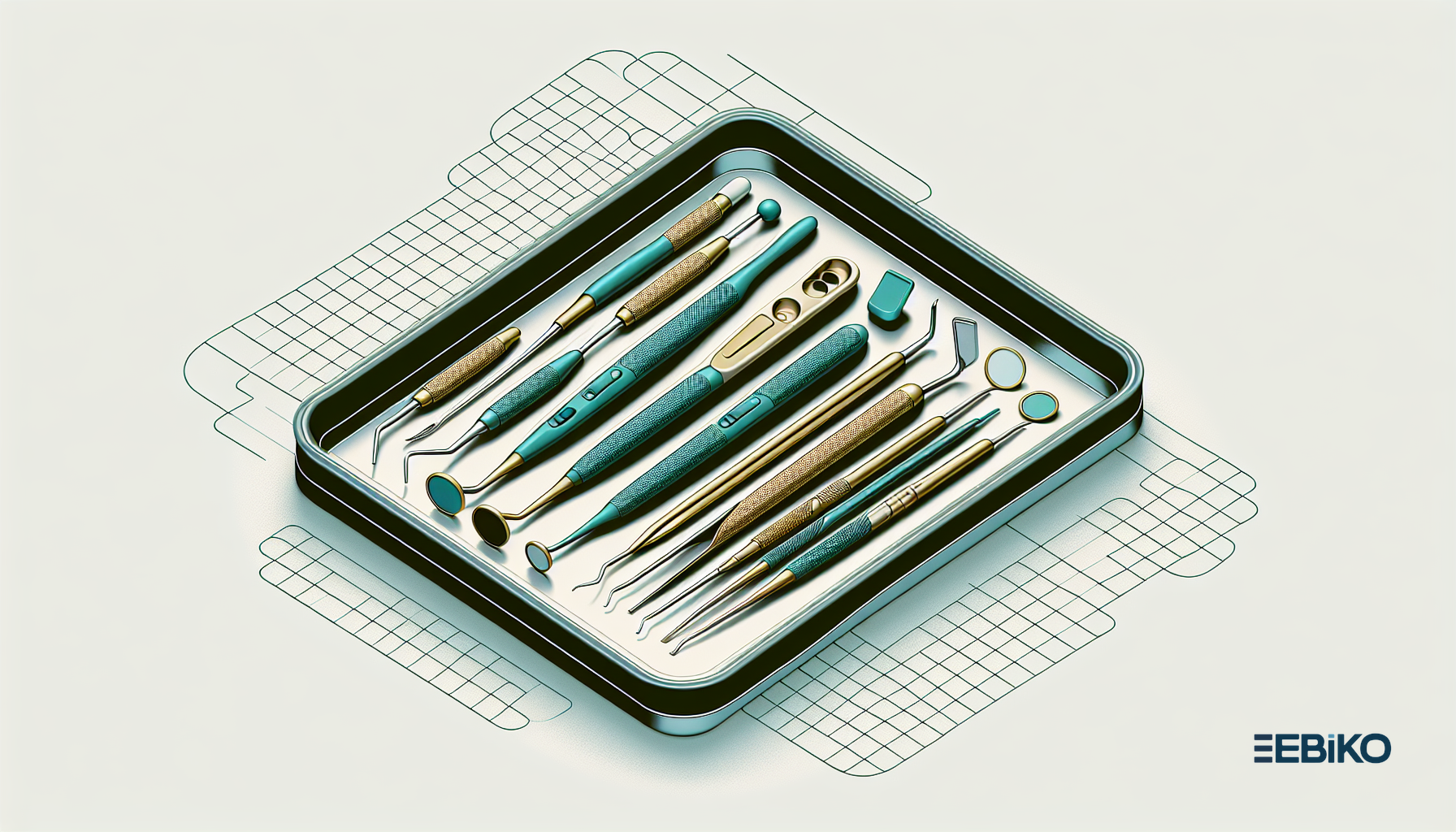
TL;DR: Choosing the right scalers and curettes is critical for effective periodontal therapy. As of March 2026, Canadian dental professionals have more options than ever — from area-specific Gracey curettes for deep subgingival scaling to versatile universal curettes for general debridement. This guide breaks down the differences, helps you match instruments to clinical scenarios, and highlights where to source professional-grade periodontal instruments in Toronto and across Canada.
Periodontal disease remains one of the most prevalent oral health conditions in Canada. According to the Canadian Dental Association (CDA), nearly seven in ten Canadians will develop gum disease at some point in their lives. For dental hygienists and dentists practising in the Greater Toronto Area and across Ontario, selecting the right hand instruments directly affects treatment outcomes, patient comfort, and clinician ergonomics.
As of March 2026, advances in instrument metallurgy and ergonomic handle design have expanded the choices available to Canadian practices. But with so many options — Gracey curettes, universal curettes, sickle scalers, Jacquette scalers, and combination sets — how do you build the right instrument kit for your operatory?
Understanding the Core Instrument Categories
Before you place your next order, it helps to understand what each instrument type does best. Periodontal instruments fall into two broad functional categories: scalers for supragingival deposits and curettes for subgingival instrumentation.
Sickle Scalers: Your Supragingival Workhorses
Sickle scalers feature a pointed tip and two cutting edges that converge at a point. They excel at removing heavy calculus deposits above the gumline — think tenacious lingual calculus on lower anteriors or buccal deposits on upper molars. However, their pointed tip makes them unsuitable for subgingival use, where tissue laceration is a real risk.
The two main sub-types are anterior sickle scalers (like the Morse Anterior Sickle Scaler available at EBIKO Dental) with a straight shank design for interproximal access on anterior teeth, and posterior sickle scalers with contra-angled shanks that reach behind molars and premolars.
Pro Tip: If you see moderate-to-heavy supragingival calculus at the hygiene appointment, start with a sickle scaler before switching to curettes. Removing gross deposits first reduces the number of curette strokes needed subgingivally, preserving your blade's edge and your wrist.
Jacquette Scalers: The Precision Alternative
Jacquette scalers share some similarities with sickle scalers but feature a wider, flatter blade profile. The 30/33 Jacquette Sickle Scaler from EBIKO Dental is a popular choice for posterior supragingival scaling, offering excellent tactile feedback for detecting residual deposits on enamel surfaces. Many clinicians in Toronto and the GTA keep both a Jacquette and a standard sickle in their cassette for maximum versatility.
Gracey Curettes: The Gold Standard for Subgingival Scaling
Developed by Dr. Clayton Gracey, these area-specific curettes remain the gold standard for subgingival instrumentation more than six decades after their introduction. Each Gracey curette is designed for a specific tooth surface and area of the mouth. The offset blade angle (70 degrees to the terminal shank) means only one cutting edge is used — the lower, outer edge.
Here is the standard Gracey numbering system and its applications:
- Gracey 1/2 — Anterior teeth, facial and lingual surfaces. The 1/2 Gracey Curette at EBIKO Dental is an essential starting instrument for any perio kit.
- Gracey 3/4 — Anterior teeth, all surfaces (slightly more angled than 1/2)
- Gracey 5/6 — Anterior and premolar teeth, facial and lingual
- Gracey 7/8 — Posterior teeth, facial and lingual surfaces
- Gracey 9/10 — Posterior teeth, facial and lingual (reaches further distally)
- Gracey 11/12 — Posterior teeth, mesial surfaces
- Gracey 13/14 — Posterior teeth, distal surfaces
For deeper pockets exceeding 5 mm, consider rigid Gracey curettes. EBIKO Dental carries the Arhum Rigid Gracey Curette line, which features a thicker, less flexible shank that provides additional lateral pressure for tenacious subgingival calculus. These are particularly valuable in non-surgical periodontal therapy when you need firm strokes without the blade flexing away from the root surface.
Pro Tip: When purchasing Gracey curettes for a new practice in Ontario, start with the "core four" — 1/2, 7/8, 11/12, and 13/14. This combination covers all tooth surfaces in both arches and represents the minimum viable Gracey set for comprehensive periodontal therapy.
Universal Curettes: Versatility Across All Surfaces
Unlike Gracey curettes, universal curettes have a blade that is perpendicular (90 degrees) to the terminal shank, with two parallel cutting edges. This means both sides of the blade can be used, and the instrument adapts to any tooth surface in any area of the mouth.
Popular universal curette designs include:
- Barnhart curettes — The 1/2 Barnhart Universal Curette available at EBIKO Dental features a medium-sized blade suitable for general subgingival debridement
- Langer curettes — The 1/2 Langer Universal Curette combines the universal design with Gracey-inspired shank angles, giving you the best of both worlds
- Bunting curettes — Excellent for general scaling with a slightly larger blade
Universal curettes are the go-to choice for general prophylaxis appointments and light-to-moderate periodontal cases. For dental hygienists in high-volume practices across Mississauga, Brampton, Markham, and Vaughan, universal curettes reduce the number of instrument changes during a typical recare appointment.
Gracey vs. Universal: When to Use Each
The Gracey-versus-universal debate is one of the longest-running discussions in dental hygiene. Here is a practical decision framework used by many periodontal specialists in the GTA:
- Use Gracey curettes when probing depths exceed 4 mm, when you need precise root planing on specific surfaces, when treating active periodontal disease, or during scaling and root planing (SRP) appointments
- Use universal curettes for routine prophylaxis and recare, for generalized light subgingular debridement, in practices that prefer fewer instrument changes, or when training new hygienists who benefit from the simpler adaptation
Most experienced clinicians use both. A practical approach: use universals for the initial gross debridement, then switch to area-specific Graceys for targeted root planing in the deepest pockets.
Building Your Periodontal Instrument Cassette
Whether you are setting up a new practice in Toronto or refreshing your instrument inventory, here is a recommended cassette build for general periodontal therapy:
- 1 anterior sickle scaler (e.g., Morse 0/00)
- 1 posterior sickle or Jacquette scaler
- Gracey curettes: 1/2, 7/8, 11/12, 13/14 (minimum), add 5/6 and 9/10 for a complete set
- 1-2 universal curettes (Barnhart or Langer)
- 1 #1 Explorer for caries detection and calculus identification
- 1 Nabers Probe for furcation assessment
EBIKO Dental also carries Cattoni Scaler/Curette combination sets that bundle popular scaler and curette pairings into a single double-ended instrument, reducing cassette bulk and sterilization load.
Pro Tip: Replace your Gracey curettes when the blade becomes visibly rounded or when you can no longer detect a distinct cutting edge by running a plastic test stick along the blade. Most practices in Ontario find they need to sharpen instruments every 8-10 uses and replace them after 6-12 months of regular use, depending on patient volume.
Ergonomics and Handle Design Matter
Musculoskeletal disorders affect a significant portion of dental hygienists across Canada. The Royal College of Dental Surgeons of Ontario (RCDSO) and the Canadian Dental Hygienists Association both emphasize the importance of ergonomic instrument selection to reduce repetitive strain injuries.
When selecting scalers and curettes, consider:
- Handle diameter: Larger-diameter handles (10 mm+) reduce grip force. Look for hollow or lightweight handles that increase diameter without adding weight
- Handle texture: Silicone or knurled handles improve grip without excessive pressure
- Balance: Well-balanced instruments reduce wrist fatigue during extended SRP sessions
- Shank flexibility: Match shank rigidity to the task — flexible for light deposits, rigid for tenacious calculus
EBIKO Dental's Arhum line features ergonomic handles designed for reduced hand fatigue, making them a strong choice for busy practices scheduling back-to-back periodontal appointments in Scarborough, Etobicoke, and North York.
Instrument Care and Sterilization Compliance in Ontario
The RCDSO's infection prevention and control (IPAC) guidelines require that all reusable periodontal instruments undergo proper reprocessing between patients. This includes pre-cleaning (manual or ultrasonic), inspection, packaging in sterilization pouches, and steam autoclaving at the validated cycle parameters.
Proper instrument maintenance also means regular sharpening. Dull curettes require more lateral pressure, increase clinician fatigue, and reduce the quality of root debridement. Many Toronto-area practices designate weekly sharpening sessions to keep their instrument inventory in peak condition.
Why Source Your Periodontal Instruments from EBIKO Dental
EBIKO Dental is a Canadian dental supply company that stocks a comprehensive range of scalers, curettes, and periodontal instruments — shipped from within Canada. This means faster delivery for practices in the GTA and across Ontario, pricing in Canadian dollars, and no cross-border customs delays.
EBIKO Dental offers free shipping on orders over $99 CAD within the GTA, $199 CAD across Ontario, and $299 CAD Canada-wide. Combined with a price match guarantee, it is a practical choice for practices looking to control supply costs without compromising instrument quality.
Shop the full range of periodontal instruments at EBIKO Dental.
Frequently Asked Questions
Q: What is the difference between a Gracey curette and a universal curette?
A Gracey curette is area-specific with an offset 70-degree blade angle and one cutting edge, designed for specific tooth surfaces. A universal curette has a 90-degree blade angle with two cutting edges and can be used on any tooth surface. Gracey curettes provide more precise adaptation for deep periodontal pockets, while universal curettes are more versatile for general debridement and prophylaxis.
Q: How often should dental scalers and curettes be replaced?
Most dental practices in Canada replace their scalers and curettes every 6 to 12 months, depending on patient volume and how frequently the instruments are sharpened. An instrument should be replaced when the blade is too thin to sharpen effectively or when the cutting edge can no longer be restored to a clinically effective sharpness.
Q: Where can I buy dental scalers and curettes in Canada?
EBIKO Dental (ebiko.ca) is a Canadian dental supply company offering a wide selection of Gracey curettes, universal curettes, sickle scalers, and Jacquette scalers with free shipping across the GTA, Ontario, and Canada-wide. All orders are shipped in Canadian dollars with no cross-border delays.